
Models of Care
Models of Care refer to specific approaches or philosophies used in care. For individuals with a dual diagnosis of intellectual and developmental disability and a mental health condition, different models of care approach treatment of dual diagnosis differently. Models of care can be specific to certain situations, such as crisis intervention and de-escalation, or be an overarching treatment modality, such as acceptance and commitment therapy. The pages below explore different models of care and how these models might help someone with a dual diagnosis.
Acceptance and Commitment Therapy (ACT)
Empowering Individuals Through Mindfulness and Acceptance
Acceptance and Commitment Therapy (ACT) is a form of psychotherapy that emphasizes mindfulness, acceptance, and personal values to help individuals navigate life’s challenges. Unlike traditional therapies that focus on eliminating negative thoughts and feelings, ACT encourages embracing them as a natural part of the human experience. By fostering psychological flexibility, ACT helps individuals lead more meaningful and fulfilling lives.
Core Principles of ACT
- Acceptance: Learning to accept thoughts and feelings without judgment.
- Cognitive Defusion: Reducing the impact of negative thoughts by changing how one relates to them.
- Being Present: Cultivating mindfulness to stay engaged in the current moment.
- Self-as-Context: Developing a sense of self that is separate from thoughts and feelings.
- Values Clarification: Identifying what truly matters to the individual.
- Committed Action: Taking steps aligned with personal values.
ACT for Individuals with a Dual Diagnosis
Understanding Dual Diagnosis
Individuals with intellectual and developmental disabilities (IDDs) may experience challenges in cognitive functioning and adaptive behaviors. A dual diagnosis occurs when someone with IDD also has a mental health condition, such as anxiety or depression. Addressing both the IDD and the mental health condition is crucial for overall well-being.
How ACT Benefits Individuals with Dual Diagnosis
- Adaptable Techniques: ACT’s flexible approach can be tailored to meet the unique needs of individuals with IDD.
- Enhancing Communication: Encourages expression of thoughts and feelings in a supportive environment.
- Building Life Skills: Focuses on developing coping strategies that improve daily functioning.
- Promoting Independence: Empowers individuals to make choices aligned with their values.
Tailored Interventions
Professionals trained in ACT can modify therapeutic techniques to accommodate varying levels of cognitive and communicative abilities. Visual aids, simplified language, and interactive activities are often employed to enhance understanding and engagement.
Resources and Support
Finding a Qualified Therapist
When seeking ACT for someone with IDD or a dual diagnosis, it’s important to find a therapist experienced in both ACT and working with individuals with these conditions. Consider the following steps:
- Consult Healthcare Providers: Ask doctors or specialists for referrals to qualified therapists.
- Professional Organizations: Visit websites like the Association for Contextual Behavioral Science to find ACT practitioners.
- Local Support Groups: Connect with community organizations that support individuals with IDD for recommendations.
Educational Materials
Books and Workbooks
Accessible literature designed for diverse reading levels can reinforce therapy sessions, such as the following:
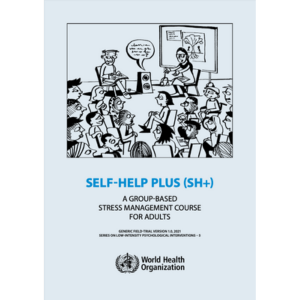
Self-Help PLUS (SH+): A Group-Based Stress Management Course for Adults
The Self-help Plus tool developed by the World Health Organization that incorporated ACT for stress management

ACT Made Simple: An Easy-To-Read Primer on Acceptance and Commitment Therapy
ACT Made Simple offers clear explanations of the six ACT processes and a set of real-world tips and solutions for rapidly and effectively implementing them in your practice. This book gives you everything you need to start using ACT with your clients for impressive results.

Get Out of Your Mind and Into Your Life: The New Acceptance and Commitment Therapy
This easy-read self-help workbook offers step-by-step exercises that are straightforward and can be adapted to different cognitive levels.

Metaphors and exercises play an incredibly important part in the successful delivery of acceptance and commitment therapy (ACT). These powerful tools go far in helping clients connect with their values and give them the motivation needed to make a real, conscious commitment to change. However, no one resource exists where you can find an exhaustive list of metaphors and experiential exercises geared toward the six core elements of ACT.

Get Out of Your Mind and Into Your Life for Teens: A Guide for Living an Extraordinary Life
This workbook that provides teens with essential skills for coping with the difficult and sometimes overwhelming emotions.

The Happiness Trap: How to Stop Struggling and Start Living
This book provides a means to escape the epidemic of stress, anxiety, and depression, unlocking the secrets to a truly fulfilling life.

The Reality Slap: Finding Peace and Fulfillment When Life Hurts
The Reality Slap offers a four-part path for healing from crises based on acceptance and commitment therapy.
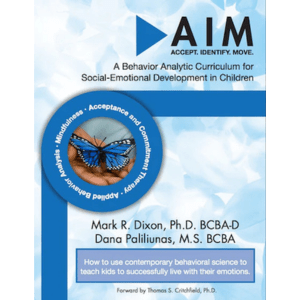
AIM: A Behavior Analytic Curriculum for Social-Emotional Development in Children
This text introduces and blends together the concepts of Mindfulness, Acceptance and Commitment Therapy, and Applied Behavior Analysis. Together the approach seeks to improve the lives of children with or without disabilities who struggle with social and emotional challenges.
Online Resources
Websites and apps offering mindfulness exercises tailored for all abilities, such as the Self-help Plus tool developed by the World Health Organization that incorporated ACT for stress management (https://www.who.int/publications/i/item/9789240035119).
Podcasts

This podcast episode discusses Mark Dixon’s book, Acceptance and Commitment Therapy for Children with Autism and Emotional Challenges.

The Behavioral Observations Podcast: The AIM Curriculum with Mark Dixon and Dana Paliliunas
This podcast discusses the Accept, Identify, and Move (AIM) curriculum.
The Behavioral Observations Podcast: Get Your ACT Together with Jonathan Tarbox
Dr. Jonathan Tarbox goes through all the ACT processes, and provides everyday examples of how they are consistent with science. Specifically, he breaks down each ACT process into a simple to understand Problem Behavior/Replacement Behavior paradigm.

Autism Knows No Borders Podcast: Neurodiversity & Acceptance Commitment Therapy, w/Brian Middleton
Brian Middleton, an autism self-advocate, a Board Certified Behavior Analyst, and the host of the Oh Behave! podcast, shares what it was like for him to be bullied in school and how he learned about his autism as an adult. The podcast also discusses his theory around why autism can be seen as both a disorder and a neurotype, the disagreement between the neurodiversity movement and the field of ABA, and the basic components of ACT.

Turn Autism Around Podcast: What is ACT Therapy? Acceptance and Commitment with Dr. Jonathan Tarbox
Dr. Mary Barbera and Dr. Jonathan Tarbox discuss ACT therapy and how it can help children with autism, and parents and professionals working with kids with autism.
Trauma-Informed Care
Trauma-Informed Care (TIC) for individuals with intellectual and developmental disabilities (IDD) is an approach that recognizes the unique ways trauma can impact people with IDD. It emphasizes understanding, recognizing, and responding to the effects of all types of trauma while considering the specific needs and vulnerabilities of people with IDD. TIC creates a safe and supportive environment, promotes empowerment, and avoids re-traumatization by ensuring that services are tailored to the individual’s cognitive, emotional, and behavioral needs. The approach involves collaboration across caregivers, professionals, and the community to foster resilience and healing.

Video: Trauma Informed Care for People with Intellectual and Developmental Disabilities
This video developed by the Illinois NTI gives a brief introduction to trauma informed care, covering the following learning objectives:
- Identify the 6 Principles of a Trauma Informed Approach, as outlined by the Substance Abuse and Mental Health Service Administration (SAMHSA)
- Define trauma informed care
- Identify why people with intellectual and developmental disabilities are at higher risk for trauma
- Recognize the effects of trauma on people’s behavior, lives, and wellbeing

This 20-minute video training was developed by the Illinois NTI to support family caregivers of people with intellectual and developmental disabilities (IDD) and mental health conditions in creating trauma-informed environments for their family members.

A Guide for Providers on Supporting Families to Create Trauma-Informed Environments
This guide was developed by the Illinois NTI for providers of people with intellectual disabilities and dual diagnosis. It covers some steps for informing families about a trauma-informed approach and how to create trauma-informed environments for their loved ones. It covers key tips for this process including:
- Making training accessible
- Being sensitive to families’ needs
- Acting as partners, and
- Emphasizing trauma-informed environments as a supplement to other types of treatment
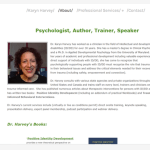
Dr. Karyn Harvey’s website offers free resources as well as information about Harvey’s published works published works, including her books on positive identity development and trauma-informed behavioral interventions For people with intellectual and Developmental Disabilities. Additionally, the website details the various services Dr. Harvey provides, such as direct onsite training, keynote speaking, webinars, and more, both virtually and in-person.
Exploring Recovery: Futures of Trauma-Informed Care
This toolkit from the National Institute of Health and All of Us campaign covers the topic of trauma-informed care. The All of Us campaign is helping to improve mental health and substance use recovery research.
Recovery-Oriented Care
Recovery-Oriented Care for individuals with intellectual and developmental disabilities (IDD) emphasizes a holistic approach to healthcare that goes beyond addressing immediate medical needs. It fosters an environment where individuals are empowered to achieve their personal goals, develop meaningful relationships, and participate fully in their communities. This approach is person-centered, recognizing the unique strengths, preferences, and aspirations of each individual. Use the links below to learn about specific Recovery-Oriented Interventions for People with Intellectual and Developmental Disabilities and Mental Health challenges.

The Autistic and OK program consists of a series of mental health and wellbeing group sessions led by peers with autism. It covers four topics including understanding and managing anxiety, depression, bullying, and obsessive-compulsive disorder (OCD).

Wellness Recovery Action Plan (WRAP)® for People with Developmental Distinctions
Wellness Recovery Action Plan (WRAP) is an evidence-based program that helps people learn how to self-manage their mental health and wellness.

Feeling Down: Looking After My Mental Health
Feeling Down is an easy-to-read, user-friendly, interactive guide developed collaboratively by people with learning disabilities, service providers, and researchers. It is designed to help people with intellectual and developmental disabilities take care of their mental health with the support of their family, friends, and service providers.
Seeking Safety for People with Intellectual and Developmental Disabilities
The Seeking Safety intervention is an evidence-based, present-focused counseling model to help people attain safety from trauma and/or addiction. It can be delivered in group or individual sessions. It directly addresses trauma, but without requiring participants to delve into the trauma narrative.
Exploring Mental Health Together Peer Mentoring Program
This peer mentoring program was developed in collaboration with and specifically for young adults with IDD and co-occurring mental health conditions. In this program, a young adult with IDD and a co-occurring mental health condition mentors another young adult to support identification and independent use of strategies to cope with mental health symptoms.
Crisis Intervention and De-Escalation
Crisis de-escalation entails employing techniques and strategies to effectively manage and mitigate the intensity of a crisis situation. This involves communicating thoughtfully with individuals who may be experiencing heightened emotions, stress, or aggression, to prevent the situation from escalating. The main objective of crisis de-escalation is to prioritize the safety of all parties involved and foster a calm and supportive atmosphere.
Crisis De-escalation Training in Illinois
These are just a few examples of crisis de-escalation training options available in Illinois. It’s important to research and choose a training program that best fits the specific needs and requirements of the individuals or organizations seeking crisis de-escalation training.
In Illinois, crisis de-escalation training is provided to law enforcement officers, security professionals, nurses, and staff in specialized mental health rehabilitation facilities. Here are some key points about crisis de-escalation training in Illinois.

The Illinois Law Enforcement Training and Standards Board (ILETSB) provides state-certified Crisis Intervention Team (CIT) training to law enforcement officers throughout Illinois. This specialized, one-week, 40-hour program offers intensive training on assisting individuals in the
community who have a mental illness or other behavioral disability.

Extrity Services is a company that offers crisis de-escalation and verbal de-escalation training in Illinois. They provide licensed, trained, and insured security professionals with ongoing certification in crisis de-escalation techniques. Their training programs focus on reinforcing crisis management
techniques and teaching advanced security methods.
The MANDT system is a conflict-resolution and de-escalation training program to prevent workplace violence. The company motto is for everyone to say, “In this place, and with these people, I feel safe.” The training program can be uniquely tailored to the individual needs of organizations and applied to any situation, though it is most often used in education, healthcare, human services, and juvenile justice. Instructor certification is required every 2 years, and staff training is required annually.
De-escalation
The verbal de-escalation training teaches practical techniques and concepts to prevent further escalation while maintaining dignity and respect. The ten-step de-escalation process emphasizes communicating with the individual, validating their feelings, asking questions to ensure you understand the individual, formulating a plan, staying positive, and recognizing when someone else needs to step in to help resolve the conflict. The de-escalation process trains people to use communication and body language to diffuse situations before they escalate. The Mandt System emphasizes supporting the person as a whole, not just their behaviors.
Crisis Prevention
The crisis prevention training supports professionals in how they approach crisis prevention, verbal de-escalation, and physical intervention. The system is broken down into three sections:
- Relational training focuses on building healthy relationships between people to promote workplace safety;
- Conceptual training focuses on learning about trauma-informed care and positive behavior supports needed to maintain workplace safety;
- Technical training focuses on situations where physical intervention is absolutely necessary for everyone’s safety; yet, it’s imperative to maintain the dignity and respect of the people or person being supported.

Safety-Care is an evidence-based training program that helps professionals reduce crises, decrease the use of restraints, and prevent injuries for individuals with the potential to exhibit aggressive behaviors. Safety-Care is appropriate for a wide range of populations and settings. Residential programs, schools, hospitals, day programs, group homes, foster care, clinics, mental health centers, and rehabilitation programs can all benefit from Safety-Care training. The training program is effective for individuals of all ages and across the full spectrum of cognitive, language, and neurological abilities. Various problematic behaviors can be addressed using the Safety-Care program. In addition to being used on its own, Safety-Care can be utilized alongside treatment approaches such as Applied Behavioral Analysis (ABA), cognitive-behavioral therapy, and trauma-informed care.
Safety-Care Philosophy
Safety-Care has a strong foundation in ABA and Positive Behavioral Interventions and Supports principles. It focuses on practical methods for preventing, minimizing, and managing behavioral crises using a gentle and person-centered approach. Safety-Care’s goal is to help prevent crises by teaching verbal and physical prevention strategies and de-escalation procedures. When a crisis cannot be avoided, Safety-Care uses safe and effective tools to manage it. Physical procedures are designed to be both effective and gentle to avoid joint stress or hyperextension, pain, or skin damage. With this approach, Safety-Care has demonstrated consistent reductions in restraint, seclusion, and injury across diverse settings.
Training Program
Safety-Care training spans two days and totals 12-16 hours. The program is highly customizable to meet an organization’s individual needs. The evidence-based curriculum is presented in a least-to-most restrictive format, starting with prevention strategies and ending with management of dangerous or problematic behaviors. Training is delivered in small, intimate class sizes to ensure each trainee receives individualized instruction. The course’s instructional methods reflect current research on how people learn effectively, improving retention of material. Annual retraining and knowledge checks are required to ensure skills are maintained and used correctly. The Safety-Care curriculum is updated regularly to reflect the latest research and current regulations. Advanced skills modules for more in-depth training are also available. These modules cover more severe problematic behaviors, how to adapt Safety-Care strategies for school-aged children, and how to train family members and caregivers who provide in-home support.

The Crisis Prevention Institute (CPI) is a leading provider of trauma-informed de-escalation training for educators and support staff. They offer scalable and customizable training solutions to ensure that all staff receive the appropriate de-escalation skills and techniques based on their role and risk level. CPI’s training programs have been shown to decrease challenging behavior, improve academic success, and increase staff retention. Training in Specialized Mental Health Rehabilitation Facilities: Crisis Prevention Institute (CPI) offers training programs for staff in specialized mental health rehabilitation facilities in Illinois. Their training focuses on prevention and de-escalation techniques, alternatives to restraint, and evaluating the risk of harm.

Shield and Star Training Inc. is a training organization in Illinois that offers crisis management and de-escalation training. They provide specialized training for law enforcement officers, including Crisis Intervention Team (CIT) courses. The president and primary trainer, Brian, has extensive experience in teaching crisis intervention and de-escalation techniques.

The Illinois State Board of Education updated their guidelines, prompting schools like Braun Educational Center to seek new training programs that could help staff support student success and well-being through proactive de-escalation. CPI training was implemented at Braun Educational
Center, with all staff receiving training at the beginning of every school year and monthly refreshers to ensure that de-escalation skills are consistently practiced.

De-escalation Training for Healthcare Workers: The Crisis Consultant Group offers a Crisis Prevention and Intervention Training course that includes lessons on verbal de-escalation, conflict resolution, effective communication, self-regulation, and self-awareness. This course is recommended for healthcare workers.
Training in Specialized Mental Health Rehabilitation Facilities: Crisis Prevention Institute (CPI) offers training programs for staff in specialized mental health rehabilitation facilities in Illinois. Their training focuses on prevention and de-escalation techniques, alternatives to restraint, and evaluating the risk of harm.
These are just a few examples of crisis de-escalation training options available in Illinois. It’s important to research and choose a training program that best fits the specific needs and requirements of the individuals or organizations seeking training.
Suggestions of questions you may want to ask regarding trainings:
- Are there online options for this training?
- What organizations offer crisis de-escalation training?
- Are there specific locations offering training?
- Ask a follow-up…
 Illinois Dual Diagnosis Training Initiative